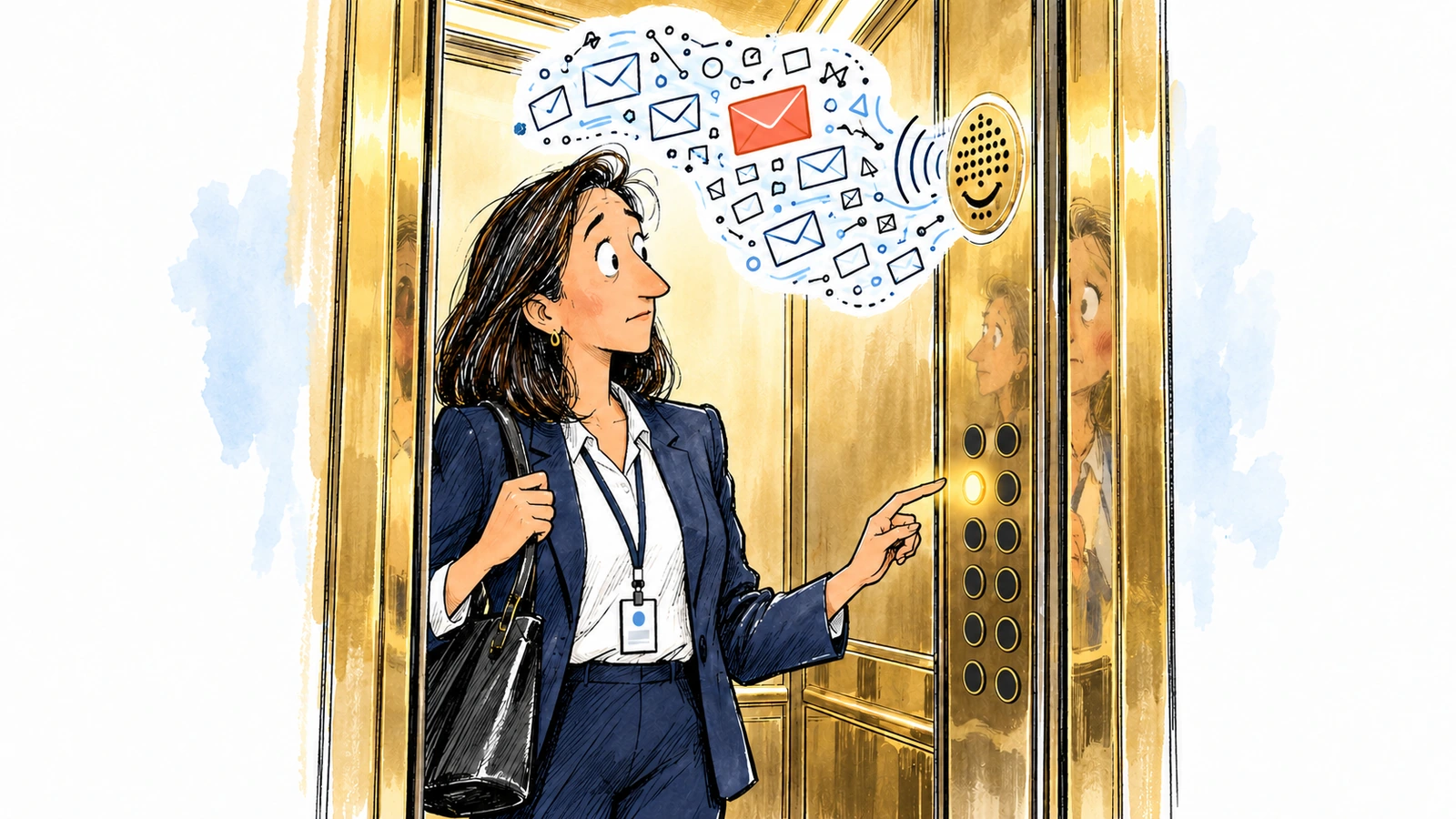
There is a lift in Fatima’s building that talks. “Doors closing,” it says, in a voice like a polite librarian. “Third floor.” Fatima, who manages the dental practice up there, has ridden it four thousand times and has never once wondered who is speaking.
That is the whole trick. We trust the voice precisely because nobody seems to be behind it.
One morning in August, Fatima’s inbox delivers a message with the subject “Automated transcript.” A voicemail, transcribed, with an audio file attached. It looks as though it came from inside her own organisation. There is no urgency, no threat and no request for money. It speaks in the flat tone of a system. She opens it and lands on a login page that already has her email address filled in. All that is left is the password.
She types it. Why wouldn’t she? Nobody wrote to her. A machine did.
The true bit
Check Point tracked a phishing campaign that reached more than 7,800 organisations in two weeks. It counted over 58,000 of these emails between 17 and 31 August 2026. The subject lines began “Automated transcript.” The sender looked like an address inside the recipient’s own organisation. The “audio” attachment was in fact an SVG, an image format that can carry code, and opening it led to a fake login page with the recipient’s address already filled in.
It didn’t pretend to be a chief executive, didn’t threaten anyone, and didn’t ask anyone to pay anything. It just told people they had a voicemail.
Automated trust
Most organisations have got much better at spotting the human con. People know to question the urgent message from the finance director, the supplier whose bank details have suddenly changed, the offer that looks too good to be true. We’ve trained for it, run simulations on it and talked about it at board level.
We haven’t done the same for machines. A normal working day now runs on messages nobody writes: meeting summaries, call transcripts, “a document has been shared with you”, approval reminders, AI-generated recaps of conversations we half-attended. They are useful, constant and easy to skim. I’ve started calling this automated trust. It builds up quietly every time we adopt a tool that sends us notifications.
Three questions for leaders
- Do our people feel they have permission to stop? Most cultures reward speed. If we want people to question the ordinary, we have to say, more than once, that checking is part of the job, and thank the person who reports something that turns out to be harmless.
- Do we know what “normal” looks like here? Does our organisation actually send voicemail transcripts by email? Do meeting summaries arrive as attachments or as links? When people know what our own systems do, anything that doesn’t fit stands out.
- What are we letting AI do on our behalf? An agent that opens attachments or follows links on its own has no instinct to hesitate. Deciding what it may open and act on without a person approving is a governance decision, and it belongs on the leadership agenda.
The moral of the story
Attackers don’t have to write a more convincing email than your colleagues do. They only need to copy the systems your colleagues have stopped questioning.
A message from a machine deserves the same moment of scrutiny as a request from a person. Arguably more, because no one on the other end will notice when something isn’t right.
Which automated messages does your organisation trust without thinking about it?